
Lesson Three
Focus Question: What are some traditions and customs of people in our classroom and of people around the world?
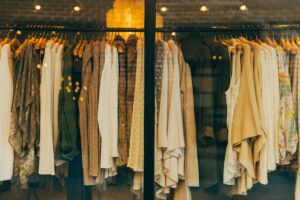 Activity One: Clothing. Explain to students that they will study what people wear every day as well as traditional clothing that may be used for certain occasions or just kept for display. Our class, our community, and the world are each made up of a diverse population. You will make comparisons of the traditions and customs of different people and the choices they make about the clothing they wear.
Write the word clothing on the board. With the students, brainstorm a list of all different types of clothing. As you list the students’ ideas, sort them into the following categories: Work and Uniform Clothing; Play and Sport Clothing; and, Formal and Dress-Up Clothing. Write the title of each category on a separate sheet of tagboard. Have students draw or cut pictures out of magazines and paste them onto the appropriate category.
Ask students: What types of clothing does your family like to wear? Record some of the student’s ideas on chart paper. Does anyone in your family wear a uniform to work? What type of work do they do? Record some of the student’s ideas on chart paper.
Optional Activity: Bulletin Board Display: Label the bulletin board, CLOTHES. On the board include photographs of some of the students (brought from home or taken during the class). Include pictures from magazines (with or without people). Include actual articles of clothing. Make labels for all of the items placed on the bulletin board. Make word cards to go with the pictures (shirt, pants, blouse, shoes, jeans, etc…). On one side have the picture and on the reverse side have its label. Word cards can be included on the bulletin board.
Optional Activity: Ask students to describe in writing or draw a picture of a special occasion that was fun to attend. They are to place emphasis upon what they wore. If they cannot identify any occasions, give examples of a wedding, Fourth of July parade, Saint Patrick’s Day party, a theater performance, and a religious holiday celebration.
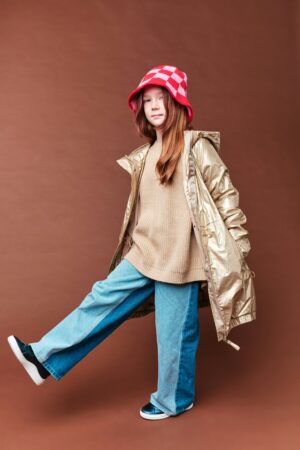 Activity Two: Our Clothing. Directions to the Teacher: Wear one of your favorite clothing outfits to school. Explain to the students that this is something you like to wear and explain why you like it. Tell students what activity you usually do when you wear this outfit. Check the clothing tag. Where was it made? Locate this on a world map. What type of fabric is the clothing made of?
Homework Project – Clothing.
Distribute a copy of the Homework Worksheet – Clothing (Handout Four) to each student. Grade 1: Developing Cultural Awareness 17 Student Directions: On the worksheet, draw a picture of yourself wearing a favorite outfit. Look at the label. Where was it made? Complete the following sentence: My outfit was made in ________. Write several sentences to tell about when you wear the outfit, why you like it, and other interesting information. For example, you may look for words that tell the type of fabric.
If applicable, After students share their experiences with classmates, assemble their worksheets into a class book or post them on the bulletin board.
Activity Three: Our Clothes are Made All Around the World. Following the Homework Project – Clothing, have students share their worksheets. Record the students’ information from on a chart titled Clothing – Here and There. (Note: If desired, have students work in pairs to share the worksheet information.)
Map of Where Our Clothes are Made. On the worksheet, refer to the question, “Where was it made?” Have students identify the location where one article of clothing was made. Post the locations on a world map. Identify which clothes were made the farthest away and which ones were the closest.
Note: If not in a classroom, have children look in their closet or drawers to see where a variety of their clothes are made. If in a classroom and students have not returned homework sheets, group students in same gender pairs. Have them select one piece of clothing that they are wearing and check the tag to see where it was made. Locate those countries on a world map.
Types of Fabric. Help students use information from their worksheets to compare and contrast the fabric used to make their clothing. Have them identify which fabrics are most durable, which are most fragile, which are most comfortable, etc…. Ask which type would be best for playground recess, which for a hot summer day, etc….
We Make Choices about What We Wear. Ask students, how do they decide what outfit to wear each day? Explain that our clothing is a resource. We have limited resources. And, we can not wear all of our clothing at the same time. We must make a choice.
Each day you have many alternatives – opportunities or options from which you can select. As you look at the different clothes in your home wardrobe, there are advantages (good points about an alternative) and disadvantages (bad points about an alternative) to wearing certain clothes.
Finally, you have to make a choice from all the clothes in your room. What will I wear today? You have many alternatives or options. The alternatives may include color choices, length of sleeves, fabric of clothes, warmth of clothing, and other things. The outfit you select is the choice you have made, the alternative or option you have selected.
Activity Four: Family Homework Interview- Clothing. Explain to students that they are going to interview a family member about the type of clothes he or she wore while he or she was growing up. Explain that the interview questions will help find out the similarities and differences of clothes from now and long ago, of clothes from other parts of our country, and of clothes from around the world. Can they remember a favorite outfit? Where did they get their clothes and what types of fabrics were used? How have clothes changed? Do they have any “traditional” clothing worn by their culture that they would model for the students in our class?
Homework Project
Duplicate a copy of the Family Homework Interview – Clothing (Handout Five) to each student. Rehearse the Interview – Have the students read out loud their questions on the interview form. Record your answers on a copy of Handout Five. Next, have students work in partner pairs and take turns asking and answering each others interview questions.
 Activity Five: Similarities and Differences.
Following the interview, have students share what they have learned about clothing. Record the students’ information from the interviews on a chart titled Clothes – Here, There, and Then.
- Help students use information from their interviews to compare the difference between the clothes worn now and those worn long ago.
- Compare and contrast the similarities and differences of clothes from different locations in our country.
- Compare and contrast the similarities and differences of clothes from different locations around the world.
Help students recognize that some aspects of clothes change over time and others stay the same. (Note: If desired, have students work together in pairs to share their interview information.)
If any parents volunteer to share their traditional clothes, invite them as guest speakers. Prepare for their visit by asking the students to brainstorm a list of questions they would like the guest to answer. Send the students’ questions home with the appropriate child. In that way, the parent may be more comfortable as a speaker and also prepared with answers that may not readily have come to mind.
Note: It is nice to anticipate a “thank you” note/gift for the speaker. Have the students create either individually, in groups or as a class such a “gift”. Make sure it is done as a “surprise” for the parent. Ideas include: draw a flag of the country of origin; write a thank you note; and/or, sing a song that reflects the country.
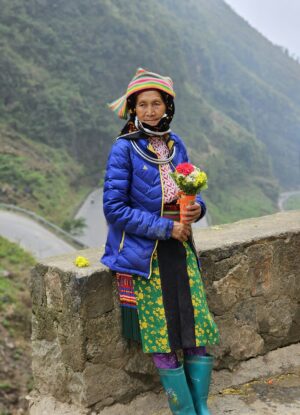
Activity Six: Clothes from Many Lands. Explain that people from different countries in the world wear different types of clothes. No matter how different peoples’ clothes might be from each other; they all help to provide protection from the climate and insects as well as basic warmth and coolness. Their selection is often based upon:
- traditions
- customs
- different body shapes and sizes
- different available styles
- different available materials
- different sewing threads, yarns, tools, and machines
- different color dyes
Share photographs of people from around the world wearing their traditional outfits. Two excellent sources are Clothes from Many Lands by Mike Jackson. This book shows photographs of children from many lands wearing traditional clothes. A globe indicator is included on each page to identify the location of each piece of clothing. The text is written in an easy-read format appropriate for first graders to read. The second good source is the book by Barnabas Kindersley and Anabel Kindersley entitled, Children Just Like Me. Over a two year period, a photographer and a teacher travel to more than 30 countries, meeting and interviewing children. Extraordinary photographs bring to life the children’s families and homes, their clothes and food, their friends and favorite games, and other aspects of their daily life.
Activity Seven: Writing About Clothes. Write the word clothing on the board. Have students brainstorm descriptive words for clothing. Sample words may include:
- types of clothes – beads, buckskins, hats, jeans, kimonos, sarongs, T-shirts • names for materials – cotton, fabric, fur, gortex, leather, nylon, polyester, rayon, silk
- weather terms – chilly, cold, cool, damp, dry, hot, humid, moist, windy
- special clothes – basketball shoes, bathing suits, dancing clothes, football helmets, hockey uniforms, party clothes, powwow attire, special occasions, wedding dresses
- descriptive words for clothing: casual, clingy, colorful, comfortable, durable, hand-me-down, knit, new, old, rough, scratchy, skimpy, soft, starched, stiff, tough, waterproof, water resistant
Discuss ways that types of clothing can be sorted. Examples might include:
- grown-up clothes – work clothes, uniforms, play clothes, formal, casual, everyday,
- grown-up clothes – casual, everyday, formal, play clothes, uniforms, work clothes
- kids clothes – dress-up clothes, play clothes, school clothes, work clothes • from long ago – breeches, corsets, pinafors, wigs • accessories – hats, jewelry, purses, scarves
Using some of the descriptive words, have students write about the importance of clothes and about different type of clothing worn today, long ago, and from different parts of the world. Display the students’ writing on the bulletin board or assemble into a class book.
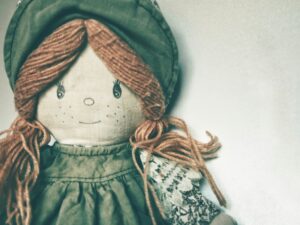 Activity Eight: Dressing a Doll. Using the Paper Doll Form (Handout Six), make patterns for students to trace onto fabric. Students cut the fabric samples and dress their doll either in an outfit they might wear, or in a traditional outfit a child might wear in another country or at a different time period. Students write a label for their doll describing the outfit and when it is to be worn.
Assessment: The assessment opportunities are embedded throughout the lesson activities. The focus questions provide a framework for the evaluation of the lesson. Assessment for the students’ work includes:
- writing, drawing, and responding orally to the focus question: “What are some clothing traditions and customs of our classroom and of people around the world?”
- drawing a picture of one favorite outfit, plus labeling its fabric and identifying where it was made.
- sorting types of clothing according to their use
- writing lists, labels, and captions
- locating on a world map where different items of clothing were made • interviewing parents and/or grandparents on the topic of clothes wore during their youth
- using descriptive words to write about the importance of clothes, the different types of clothing worn today, worn long ago, and clothing worn in different parts of the world.
- Dressing a doll either in an outfit the student might wear, or in a traditional outfit a child might wear in another country or at a different time period.