
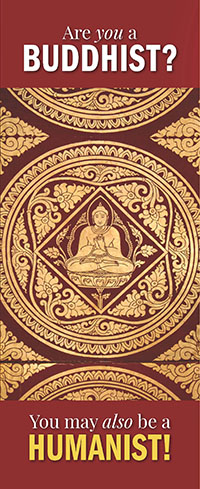
 Buddhism is believed to have started in India with Siddhartha Gautama. Siddhartha was born around the fifth century BCE to a tribal chief of a clan in southern Nepal. According to Buddhist literature, it was prophesied that he would become a king if he stayed home, or a great sage and savior of humanity if he left. Siddhartha’s father did not want his son to leave home because he wanted his son to be a king and follow in his footsteps. As the story goes, Siddhartha grew up surrounded by riches and luxury and knew only pleasures. He lived in palaces and was shielded from any pain or ugliness by his father so that he would not experience human suffering. But Siddhartha became restless with his life of luxury. He wondered what else life held and demanded to see the outside world. His father gave in and let him see the outside world, but he tried to limit his experiences to young, healthy people. That is not what happened.
According to the story, during his travels outside the city, Siddhartha came across four sights that left a lasting impression on him. (1) Since he had never seen old and decrepit people before, he was shocked when he came across an old man. (2) When he was trying to find out more about old men, he stumbled upon a very ill person. This was even more shocking, as he had never known or seen illness before. (3) Then he saw a funeral party by the side of a river. This, too, was new and, for him, most shocking of all. (4) Lastly, he encountered a traveling monk who had given up all the pleasures of the flesh. His face was so serene that the image stayed in Siddhartha’s thoughts for a long time.
Siddhartha is said to have learned some simple truths he had been shielded from: we all get sick, grow old, and die. He decided to abandon his previous life and devote himself to working out a way to end suffering. His initial method was to emulate the traveling monk, deny all pleasure, and follow a life of extreme asceticism. But this state of being nearly killed him. What saved him was that one day he heard someone speak about the strings on a musical instrument: if a string is too tight, it will break and be ruined; if it is too loose, you cannot make beautiful music. Siddhartha applied this to his own existence and formulated the idea of the Middle Way: do not deny the physical body totally and yet do not live life to indulge the body’s every whim. Siddhartha meditated on this for some time and eventually came to understand the concept of enlightenment. After this, he became known as “Buddha” or the “enlightened one.” Eventually, he started teaching his philosophy and gained a large following. After going through a life of self-denial, discipline, and meditation, he is said to have attained enlightenment, which resulted in the alleviation of his pain and suffering. He then embarked on a journey of teaching others the path that would liberate them from the cycle of life and death.
Gradually, Buddhism spread to numerous countries. The original Indian foundation was expanded by the inclusion of Central Asian, East Asian, and Southeast Asian cultures. Today, Buddhism has spread to almost all countries worldwide, with the Buddhist population estimated at around 500 million. China has the largest population, while Thailand, Cambodia, and Myanmar have the highest proportions of Buddhists. Buddhism is also becoming more widely practiced in America, Australia, and the United Kingdom.
Although Buddhism has many divisions or schools, two main branches differ in some areas of focus. Theravada Buddhism focuses on individual enlightenment and experience as well as monastic life. Mahayana Buddhism focuses on collective freedom from suffering and teaching the ways to enlightenment. Zen and Tibetan Buddhism, both considered offshoots of the Mahayana tradition, are the two types of Buddhism most people in Western countries practice.
The Key Principles of Buddhism
Buddhism differs from many other faith traditions because it is not centered on the relationship between humans and a high god. Buddhists do not believe in a personal creator God. In a sense, Buddhism is more than a religion; it is a tradition focused on personal spiritual development. To many, it is more of a philosophy and a humanistic way of life, summed up as striving to lead a moral life; being aware of one’s thoughts and actions; and developing wisdom, compassion, and understanding. The key principles are briefly outlined below.
Buddhism’s Four Noble Truths, the Eightfold Path and The Middle Way
The Four Noble Truths are for those seeking enlightenment and refuge from suffering. In brief, they are: (1) Suffering exists. (2) Suffering arises from attachment to desires. (3) Suffering ceases when attachment to desire ceases. (4) Freedom from suffering is possible by practicing the Eightfold Path.
The Eightfold Path is expressed as the road to the cessation of suffering and to enlightenment for the purpose of personal happiness and the happiness of all others. They are: (1) Right View/Right Understanding, (2) Right Thought/Right Intention, (3) Right Speech, (4) Right Action, (5) Right Livelihood, (6) Right Effort, (7) Right Mindfulness, and (8) Right Concentration. Buddhist practitioners usually divide the path into three sections: the wisdom section, comprising right understanding and right intention; the morality section, comprising right speech, right action, and right livelihood; and the mental development section, consisting of right effort, right mindfulness, and right concentration.
Numerous scholars and spokespersons have written volumes on Buddhist principles. The following three brief illustrations reflect on the various components of the Buddhist perspective which relate to humanism.
— Paul Chiariello, assistant coordinator and webmaster at the Humanist Chaplaincy at Rutgers University, has written that “Buddhism and Humanism are two geographical sides of the same philosophical coin. They’re twins with the same DNA, separated at birth, and brought up by different parents…. Buddhism is Eastern Humanism and Humanism is Western Buddhism.”
He maintains that both share a common core, unlike other worldviews, in their emphasis on reason and compassion. For humanism, reason always has been the “Summum Bonum” (the highest good). With regard to compassion, he cites Humanist Manifesto III: “The lifestance of Humanism — guided by reason, inspired by compassion, and informed by experience—encourages us to live life well and fully.” He also asserts that empathy is central to both Buddhism and humanism and quotes what he calls a popular humanist notion: “If you can’t determine right from wrong, you lack empathy, not religion.”
(source)
— Dr. Victor A. Gunasekara, in his book Basic Buddhism: A Modern Introduction to the Buddha’s Teaching (3rd edition, 1997), affirms that Buddhism has an affinity with Western notions of humanism and rationalism. He asserts that “…. if humanism means what it should mean, that is the primacy of the human as against the Divine, then it conforms to the Buddhist approach.” (source)
— Dr. Gandham Appa Rao, retired professor at Madras University in India, in writing about the humanism of Buddha stated that “Gautama Buddha was a humanist par excellence” and that people are responsible for their conduct and progress. Buddhism thus makes humanity the central figure in all that affects human life. “Buddha preached kindness and pity for all life and formulated constructive methods for progress and happiness of all in human society.” (source)
Another principle of Buddhism is “The Middle Way,” which implies a balanced approach to life and the regulation of one’s impulses and behavior. Buddhism itself is sometimes referred to as “The Middle Way,” indicating reconciliation of the extremes of opposing views. In the broadest sense, the Middle Way refers to the actions or attitudes that will create happiness for oneself and others. In many ways, it is similar to the humanist perspective that recognizes that reason and rationality should be balanced with empathy and compassion.
Wisdom and Compassion
Buddhism is often explained not as something one believes, but as something one does to develop wisdom and compassion. A central tenet of Buddhism is that wisdom and compassion are inextricably linked; they too are two sides of the same coin. The Buddha taught that to realize enlightenment, a person must develop both qualities. Wisdom and compassion are sometimes compared to two wings that work together to enable birds to fly or two eyes that work together to enable one to see more clearly. These are not “principles” as such but rather deeply humanistic qualities that one works to develop.
Wisdom is to directly see and interpret for oneself and to keep an open mind; to listen to other opinions rather than being close-minded; to carefully examine facts that contradict one’s beliefs rather than burying one’s head in the sand; to be objective rather than prejudiced; to take time forming opinions and beliefs rather than blindly accepting what is offered to us; always being ready to change one’s beliefs when facts or truth that contradicts them are presented to us.
Compassion is both an attitude and an action. It includes sharing, readiness to give comfort, showing concern and care; having a kind heart; being generous and helpful to fellow beings; and respecting all lives while being mindful of one’s actions and words. When we see someone in distress, feel their pain as if it were our own, and strive to eliminate or lessen it, this is compassion. All of the best in human beings and all the Buddha-like qualities like sharing, readiness to give comfort, sympathy, concern, and caring are manifestations of compassion.
As noted, numerous scholars and spokespersons have written much about the principles of Buddhism. We conclude this section with a reference to the one written by the Dalai Lama in Awakening the Mind, Lightening the Heart: Core Teachings of Tibetan Buddhism (HarperSanFrancisco, 1995). The book offers his thought-provoking perspectives on how compassion can be developed and practiced. We selected several highly relevant passages from the book that illustrate this central, humanistic principle of Buddhism.
… the awakening mind (is) the aspiration to achieve enlightenment for the sake of helping others. (p. ix)
You cultivate the awakening mind by … resolving to work for their (all sentient beings) well-being. (p. 55)
Compassion … is the state of mind that comes about when we focus on the sufferings of other sentient beings and cultivate a strong wish that they be free from such suffering. (p. 107)
Whichever way you do it, the practice of taking with compassion and the practice of giving with love give rise to the special resolve to free all beings from suffering, and that leads to the awakening mind. (p. 123)
… it is important that development of the qualities of compassion should be augmented by wisdom, and development of the qualities of wisdom should be augmented by compassion. Compassion and wisdom should be practiced in combination. (p.148)
Principles of Humanism
Numerous sources present the key principles of humanism. We have drawn from
several of them and listed several below.
From Humanist Manifesto I (1933)
— In place of the old attitudes involved in worship and prayer, the humanist finds his religious emotions expressed in a heightened sense of personal life and in a cooperative effort to promote social well-being.
–The goal of humanism is a free and universal society in which people voluntarily and intelligently cooperate for the common good.
(source)
From Humanist Manifesto II (1973)
— From the Preface: “Humanism is an ethical process through which we all can move, above and beyond the divisive particulars, heroic personalities, dogmatic creeds, and ritual customs of past religions or their mere negation.”
— From the Closing: “We will survive and prosper only in a world of shared humane values…. At the present juncture of history, commitment to all humankind is the highest commitment of which we are capable.”
(source)
From Humanist Manifesto III: Humanism and Its Aspirations (2003)
“…Thus engaged in the flow of life, we aspire to this vision with the informed conviction that
humanity has the ability to progress toward its highest ideals. The responsibility for our lives
and the kind of world in which we live is ours and ours alone.”
(source)
From the Amsterdam Declaration 2002 (International Humanist and Ethical Union)
— Humanism is a lifestance aiming at the maximum possible fulfillment through the cultivation of ethical and creative living and offers an ethical and rational means of addressing the challenges of our times. Humanism can be a way of life for everyone everywhere. (Emphasis added)
(source)
From “What Is Humanism?” by Fred Edwords
Former AHA Executive Director and director of the United Coalition of Reason,
Fred Edwords has written prolifically about the principles of humanism. In What Is Humanism? he concluded: “So, with modern humanism one finds a lifestance or worldview that is in tune with modern knowledge; is inspiring, socially conscious, and personally meaningful. It is not only the thinking person’s outlook but that of the feeling person as well, for it has inspired the arts as much as it has the sciences; philanthropy as much as critique. And even in critique it is tolerant, defending the rights of all people to choose other ways, to speak and to write freely, to live their lives according to their own lights. So the choice is yours. Are you a humanist? You needn’t answer ‘yes’ or ‘no.’ For it isn’t an either-or proposition. Humanism is yours — to adopt or to simply draw from. You may take a little or a lot, sip from the cup or drink it to the dregs. It’s up to you.”
(source)
While many others have voiced the central principles of humanism, few have said it more
eloquently than Helen Bennett in her poem “What Humanism Means to Me” in her book,
Humanism, What’s That? A Book for Curious Kids (Prometheus Books, Amherst, NY, 2005).
Humanism means to me
I’ve got the opportunity
To realize that I am free
To take responsibility.
To me, it doesn’t seem so odd
That many people pray to God
Whenever they are feeling low —
It’s just the way they have to go.
But when I do not know the way
I do not feel the need to pray.
I use my brain to figure out
What the problem’s all about.
I’m grateful that I have my eyes
To see the beauty of the skies,
I’m glad I have my ears to hear
The voices of my friends so dear.
But best of all, my brains the one
That figures out what must be done
To help me run a better race,
To make the world a better place.
For additional essays on Living the Humanist Life, Humanism and Traditional Religion and related issues, click here.
Comparisons and Contrast: On Common Ground
In many ways, Buddhism and humanism are on common ground. The primary commonalities are the rejection of a creator deity and the emphasis on social justice and reason. The common values that various schools of Buddhism share with humanism center on empathy and the inherent dignity of all people, as well as compassion and the values that prompt humanistic action, namely, deep respect for human rights.
A key difference is secular humanism’s rejection of the concept of “divine.” While traditional Buddhism rejects the concept of a creator god, it maintains belief in the “divine” nature of life and the sanctity of all things, including mountains, rivers, plants, and trees. One could think of it as a reinterpretation of the idea of “divine.”
Humanism As The Next Step (The Humanist Press, Washington, DC, revised edition, 1998) by Lloyd and Mary Morain presents an overview of the history and principles of modern humanism. However, humanism is the next step many Buddhists have already taken, as noted below.
Humanistic Buddhism has been described (in a Wikipedia review) as focusing on caring for the living, working for others’ benefit, compassion, and altruism. It focuses on issues in the world rather than on how to leave the world behind. It focuses on benefiting others rather than oneself. It is an essentially optimistic belief in the core dignity of humans and their ability to transform themselves in a positive way.
Similarly, Buddhist Humanism is described (also in a Wikipedia review) as a philosophical perspective based on the inherent dignity of all humans, their interdependence, and creating harmony through relationships. It is expressed through actions that contribute to society’s welfare, human rights, world peace, and social justice.
In a written interview with Roy Speckhardt, Executive Director of the American Humanist Association, Mark W. Gura, co-founder and Executive Director of the Association of Mindfulness Meditation and Secular Buddhism (www.ammsb.org), said that Humanism, Humanistic Buddhism, and Secular Buddhism are branches of the same tree. A reformation is occurring within Traditional Buddhism. Some Buddhists have become skeptical of faith-based claims and have concluded that they do not believe in gods, gurus, or the supernatural, but they still practice some Buddhist techniques and traditions. These Buddhists are secularists, because they advocate only those beliefs and practices that are consistent with and corroborated by reason and science. They are Humanists, because they strive to be ethical, compassionate and charitable. In essence, they are Humanists who meditate and honor Buddhism’s secular contributions. Therefore, they call themselves Humanistic or Secular Buddhists.
Brian Nicol, chair of the Mid-Warwickshire branch of Amnesty International and a member of the Coventry and Warwickshire Humanists in England, has compared Buddhism with secular humanism and stresses that both accept that people have to take responsibility for their own actions and suffer or accept the consequences. He also points out that humanists see the rewards of good action as solely on earth and that death ends consciousness. He writes that “we (humanists) do not believe in reincarnation. To believe in reincarnation is an act of faith. Even Buddha offered no proof. Moreover, there is a school of Buddhist thought that plays down reincarnation (and by implication Nirvana?) as not being essential to Buddhism.”
(source)
Similarly, Charles Anderson, in a presentation to the North Yorkshire Humanist Group, indicated that he was inspired by his own personal religious history “from my early upbringing as a Christian, through atheism, then Buddhism, and more recently humanism.” Here is one of the most relevant excerpts from his presentation: “There were some issues I always had with Buddhism. As it turned out, these were mostly the bits I had to abandon when I became a humanist. Reincarnation and Karma are central to the idea of the Wheel of Life. The problem, though, is that they’re both completely untestable. There is no way that you can ever tie some piece of fortune to a previous action, unless the reaction is immediate. A child born with a deformity may be reaping the consequences of evil actions in a past life, but how can we prove it? …. I realized that if I dropped my belief in karma and rebirth, which I’d always had problems with anyway, it turned out I was a humanist already.” Charles Anderson’s path to humanism is exceptionally interesting, and we highly recommend reading his entire story, which you can find here.
Buddhist humanists therefore have several concepts they would want to consider and perhaps reinterpret to hold to humanist ideals of reason—primarily rebirth, levitation, and Karma. One central element of humanism is that it is a philosophy for the “here and now,” and humanists regard human values as making sense only in the context of human life rather than in the promise of a supposed afterlife. Or as humanist philosopher Corliss Lamont stated, “This life is all … and enough.”
Regarding levitation, it is recounted that one of the miracles of Buddha was that he supposedly walked on water, levitating over a stream to convert a Brahmin to Buddhism. Yogi Milarepa was also said to have possessed a range of levitation abilities, including the ability to walk, rest, and sleep. Humanists are skeptical about these claims. Skepticism remains because evidence for such acts isn’t available, and brain studies of meditating monks show that the feeling of levitation is more of a chemical/neurological reaction within the brain to a deep meditative state. For more on this issue, see Vivek Palavali’s A Mindful Life: A Brain Surgeon’s Personal Experiences and Philosophical Reflections on Living Life Fully.
Karma is worth special consideration because it can be reinterpreted rationally as increasing the likelihood of positive and negative feedback for positive and negative actions, rather than as a mystical force keeping everything in balance. For example, being kind to someone tends to increase the likelihood that they will respond by being kind in turn. Acts of kindness are infectious and reciprocal, helping create kindness-aware individuals and communities.
Humanists strive to embrace the moral principle of the Golden Rule, the ethic of reciprocity, and treat each other as one would like to be treated themselves—with tolerance, consideration, and compassion. The Golden Rule, a unifying humanistic principle, cannot be claimed for any one philosophy or religion. Throughout the ages, many traditions have promoted one version or another. In Buddhism, the Golden Rule is “Treat not others in ways that you yourself would find hurtful.” (The Buddha: Udana-Varga 5-18)
We Are on the Same Page
When you compare the following quotations, you will see that we are indeed on the same page.
“each this triple truth to all: A generous heart, kind speech, and a life of service and compassion are the things which renew humanity. – Buddha
If I see lonely people, people who have been jailed unjustly and have lost their freedom, people who are suffering from illness, disaster or poverty, I will not abandon them. I will bring them spiritual and material comfort. — Shrimala, the daughter of King Prasenajit and a contemporary of Buddha
All of the world’s major religions, with their emphasis on love, compassion, patience, tolerance and forgiveness can and do promote inner values. But the reality of the world today is that grounding ethics in religion is no longer adequate. This is why I am increasingly convinced that the time has come to find a way of thinking about spirituality and ethics beyond religion altogether. — The Dalai Lama
When you catch yourself slipping into a pool of negativity, notice how it derives from nothing other than resistance to the current situation. — Donna Quesada, Buddha in the Classroom: Zen Wisdom to Inspire Teachers
The natural sympathy and understanding of people everywhere must be the soil in which the new humanism can thrive. — Daisaku Ikeda in “A New Humanism: The University Addresses of Daisaku Ikeda”
Impartial, compassionate, brave, and understanding…these are the traits that come with putting the Noble Eightfold Path into practice. By following this path, anyone can become the kind of leader the Buddha hoped to see — a leader of peace. — Victoria Stoklasa, Buddhism and Politics: Citizens, Politicians, and the Noble Eightfold Path
The manifestation of humanism is evident in Buddhist teachings. For example, the concept of Noble Eightfold Path (or the way leading to the cessation of suffering) in Agama Sutra and the spirit of altruism (or compassion) in Mahayana Buddhism are based on the beliefs of self respect and goodwill toward other individuals; both are fundamental viewpoints of humanism.
— Xiao Lihua, National Taiwan University in “The Spirit of Humanism in Buddhism”
Lastly we will share a number of insightful statements by Pema Chödrön, an ordained nun and notable American figure in Tibetan Buddhism. A prolific author, she has conducted workshops, seminars, and meditation retreats in Europe, Australia, and throughout North America.
Compassion is not a relationship between the healer and the wounded. It’s a relationship between equals. Only when we know our own darkness well can we be present with the darkness of others. Compassion becomes real when we recognize our shared humanity.
Better to join in with humanity than to set ourselves apart.
Compassionate action involves working with ourselves as much as working with others.
It is unconditional compassion for ourselves that leads naturally to unconditional compassion for others.
When we talk of compassion, we usually mean working with those less fortunate than ourselves. Because we have better opportunities, a good education, and good health, we should be compassionate toward those poor people who don’t have any of that. However, in working with the teachings on how to awaken compassion and in trying to help others, we might come to realize that compassionate action involves working with ourselves as much as working with others. Compassionate action is a practice, one of the most advanced. There’s nothing more advanced than relating with others. There’s nothing more advanced than communication — compassionate communication.
Throughout my life, until this very moment, whatever virtue I have accomplished, including any benefit that may come from this book, I dedicate to the welfare of all beings.
May the roots of suffering diminish. May warfare, violence, neglect, indifference, and addiction also decrease.
May the wisdom and compassion of all beings increase, now and in the future.
May we clearly see all the barriers we erect between ourselves and others to be as insubstantial as our dreams.
May we appreciate the great perfection of all phenomena.
May we continue to open our hearts and minds, in order to work ceaselessly for the benefit of all beings.
May we go to the places that scare us.
May we lead the life of a warrior.”
— Pema Chödrön, The Places That Scare You: A Guide to Fearlessness in Difficult TimesHumanism is a rational philosophy informed by science, inspired by art, and motivated by compassion. Affirming the dignity of each human being, it supports the maximization of individual liberty and opportunity consonant with social and planetary responsibility. It advocates the extension of participatory democracy and the expansion of the open society, standing for human rights and social justice. Free of supernaturalism, it recognizes human beings as a part of nature and holds that values — be they religious, ethical, social, or political –have their source in human experience and culture. Humanism thus derives the goals of life from human need and interest rather than from theological or ideological abstractions, and asserts that humanity must take responsibility for its own destiny. — The Humanist Magazine, the official publication of the American Humanist Association
In my view, humanism relies on reason and compassion. Reason guides our attempt to understand the world about us. Both reason and compassion guide our efforts to apply that knowledge ethically, to understand other people, and have ethical relationships with other people. — Molleen Matsumura was a humanist activist, writer and editor as well as a project director for the National Center for Science Education.
Why shouldn’t I consider others? These ultimate moral questions, like all ultimate questions, can be desperately difficult to answer…. Myself, I think the only possible answer to this question is the humanist one – because we are naturally social beings; we live in communities; and life in any community, from the family outwards, is much happier, and fuller, and richer if the members are friendly and co-operative than if they are hostile and resentful. — Margaret Knight was a British psychologist and broadcaster who often spoke on the issues of morality without religion.
As a Humanist, I believe enhancing human welfare is our primary moral goal. Other goals might include minimizing suffering, making decisions that are fair, and enhancing human freedom and dignity. I think the evidence shows that these and others are universal human goals. My simple answer to where humanist ethics are grounded is they are based on reason, compassion, responsibility, and belief in the worth and dignity of each human being. — Michael Werner, former president of the American Humanist Association
As humanists, we must first learn about the barriers that the less fortunate face, then work alongside them to eliminate these barriers. We should not only help provide for their immediate and short-term needs, but to also help them access resources that will make them independent of the compassion and empathy of others, and allow them to achieve long-term self-sufficiency and economic freedom. — Armineh Noravian is an engineering management consultant and a humanist activist in California.
I feel no need for any other faith than my faith in the kindness of human beings. I am so absorbed in the wonder of earth and the life upon it that I cannot think of heaven and angels. — Pearl S. Buck
The word ‘humanism’ has more than one meaning — Generally, it implies a desire to think for yourself; to ‘do your own thing’; to accept the results of free inquiry, whatever they may be; and to act in accordance with those results, in the light of reason and in co-operation with others, for the promotion of human happiness. — Barbara Smoker, Humanism
The Humanist view of life is progressive and optimistic, in awe of human potential, living without fear of judgment and death, finding enough purpose and meaning in life, love and leaving a good legacy. — Polly Toynbee, British Humanist Association
******
An interesting and highly relevant footnote is the 2008 findings of the Pew Forum on Religion and Public Life. The study indicated that 45% of the Buddhist population in the United States believes that “God is an Impersonal Force” and 19% do not hold a belief in God at all. This translates into approximately 9.9 million American Buddhists who hold a non-traditional theistic belief and approximately 930,000 who are atheists.
You wouldn’t be alone in adding the humanist identity to your Buddhism.
A Brief History of Secular Buddhism
For 2,500 years, monks practiced Buddhist meditation—practices older than Christianity and Islam. Meditation was not generally taught to lay people.
19th century: Buddhism came to the attention of Western intellectuals
1890’s-1950’s: Buddhist meditation was first taught to laypeople en masse: Burmese monks Ledi Sayadaw, Webu Sayadaw, and Saya Thetgyi taught meditation to lay meditation teachers such as Sayagyi U Ba Khin.
1960’s: Sayagyi U Ba Khin teaches S.N. Goenka, and after 1976, Goenka creates hundreds of secular meditation centers that teach Vipassana, a form of mindfulness meditation and proto-Secular Buddhism.
1979: Jon Kabat-Zinn founded the Mindfulness-Based Stress Reduction (MBSR) program at the University of Massachusetts to treat the chronically ill.
2011: Stephen Batchelor published the book “Buddhist Atheist.” Small local and online Secular Buddhist groups form around the world
2015: Mark W. Gura co-founded the Association of Mindfulness Meditation and Secular Buddhism (AMMSB.org), the first national nonprofit dedicated to Secular Buddhism in the U.S., and he published “Atheist Meditation.”
2016: The Atheist Alliance of America started to inform the atheist community about Secular Buddhism.
2016: With the help of Peter Boghossian and Anthony Magnabosco, the AMMSB adopted the use of Street Epistemology to introduce Secular Buddhism to traditional Buddhists.
2017: With the help of Rebecca Hale and Roy Speckhardt, the American Humanist Association and the AMMSB collaborated to further inform the secular humanist and atheist community about Secular Buddhism.
A Final Note
Buddhism and humanism affirm the dignity of every human being and assert that humanity is responsible for its own destiny, having within itself all that is needed to improve the condition of life. Both maintain that happiness is attained by harmoniously combining personal development with actions that contribute to the community’s welfare. Altruism, empathy, and compassion are synonyms for Buddhism and humanism. Whether we call it “enlightenment” or “the conviction that humanity has the ability to progress toward its highest ideals,” we are, indeed, on common ground.
You can, of course, follow the American Humanist Association on Facebook and Twitter;
become a member of the AHA; and identify yourself as both a humanist and as a Buddhist.
You surely would not be the first to do so!
For additional information and for answers to any questions you might have about the humanist
worldview or life-stance, please contact aha@americanhumanist.org
Download as a PDF or view our brochure